Author Kevin

Building a Half Mask

Last week we dug in, got our hands dirty and started to make our own half masks. It was a rewarding process, but it isn’t done yet. We’ll show our first performances with them tomorrow. Matteo mentioned that making these masks has an element of alchemy. The shape you form in the clay transfers from material to material, from plaster to paper, then it transforms the actor’s body and if it’s good, it will finally arrive to the audience. Even if you think it’s a really good one, you don’t know if your proposal in clay will sustain a performance until you play it.

Making a plaster cast of your face helps keep your proportions accurate.
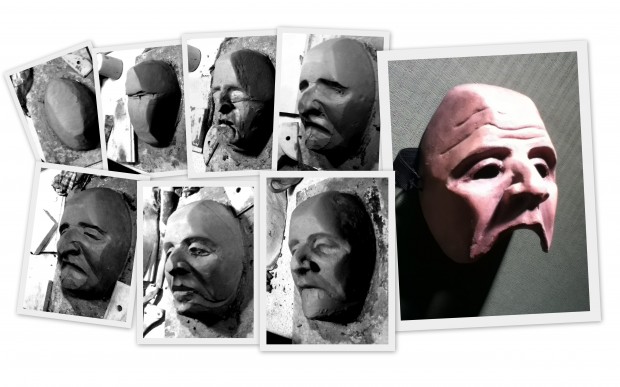
Comedy or tragedy? I don’t know, but I think he’s a republican.

Now we’re midway though the second term at school. These weeks are all about performing in half face mask. How do you play this technically demanding form of theater while bringing intuitive ease that makes the performance interesting to see? Finding the body and voice of the mask, improvising from that place and building up a piece that is true. If you’re prepared and lucky it can generate very funny and touching work.

Jenine describes the work very well on her website:

Dramatic depth can be found in the action of simple every day things.  And it is in the action that the sentiment is revealed.  The action is seen through very strict action and reaction with your co-players.  A delicate dance of technique and sentiment – without one you don’t have the other.  Although more often than not we’ll forgive lack of technique over sentiment. As Matteo says without sentiment your mask is nothing more than paper mache and elastic.
Old Whales

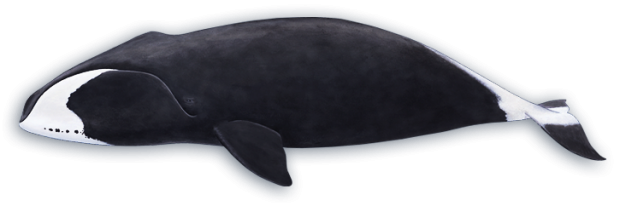
Bowhead whales were nearly hunted to extinction for their clean burning blubber. After the whale oil boom their population was estimated to be around one thousand individuals, but today they are doing much better. According to this article scientists “began recording whale numbers 34 years ago, [since then] their counts have increased from 1,200 animals in 1978 to 3,400 in 2011. From those numbers of whales seen, George estimates there are now 14,000 to 15,000 animals.”

This blog post from the Smithsonian points out that the best part of the article is that the whales can live up to 200 years. Which means there may be whales swimming in the arctic today that were born before Melvile wrote Moby Dick in 1851.

Spiders Weaving Spiders

Scientists in Peru have discovered what they think may be a new species of spider which uses twigs and dead insects to build decoy spiders to trick predators.

Afterward, Torres returned to the trails near the research center. Only within a roughly 1-square-mile area near the floodplain did Torres find more spider-building spiders — about 25 of them. “They could be quite locally restricted,” he said. “But for all I know, there’s millions of them in the forest beyond.” The spiders’ webs were crafted around face-height, near the trail, and about the width of a stretched-out hand. Some of the decoys placed in the webs looked rather realistic. Others resembled something more like a cartoon octopus.

Masks of the History Museum

While I was still in New York I had the pleasure of running through the American Natural History Museum looking at some of the beautiful masks tucked away in their collections. It’s an old fashioned museum in a lot of ways, and masks of the are displayed with almost no context, like butterflies on a pin-board. In one particularly bad display of Pacific Island masks one card read, “New Ireland.” Well, I thought, there is a New Ireland.

t

Today the low pile carpet and oak and glass cabinets make the Hall of the Northwest Coast Indians pretty shabby and unwelcoming but in his book The Way of the Masks, Claude Levi-Strauss described his experience of the hall with the first stanza of Charles Baudelaire’s poem Correspondences:

Nature is a temple in which living pillars
Sometimes give voice to confused words;
Man passes there through forests of symbols
Which look at him with understanding eyes.

Taken as objects behind glass the masks can seem meaningless, crude and lifeless. Their cards are unhelpful to the point of silliness. They all seem to read along the lines of: wooden mask, shaman’s mask, a mask is a pretend face etc. But with a little imagination and curiosity they start to come alive. Piercing stares, flapping, lolling tongues. Some even have mechanisms–hinges and pulleys–that can tear apart one face to reveal a face underneath. Not to mention the human bodies that must have played these masks, breathing through them and embodying every distorted and extreme detail.  Whoo!

The Big Apple Picking

Sara drove Bannack and I upstate to an apple orchard to pick our own half bushel of some of the best tasting sweet apples I’ve ever eaten. Cars filled the parking lot outside the gift shop. Inside we bought our bag to fill and got advice on where to pick from a muscle shirted guy standing in front of his date, “Go all the way back.”

Back around the shop there was a duck pond, a pumpkin patch, chickens, goats and a rustic tree lined trail up to the orchard. I’ve never seen apples hang so heavily from trees before. Some branches were broken from the weight.

By the time we got to the top of a hill a man eating a huge stalk of broccoli stopped his light-duty four wheeler. I asked him where to find the best tasting apples and he pointed the way down the other side of the hill to a row of trees right on the edge of the farm. As he pulled away I noticed a bottle of beer in his cup-holder.

We charged down the path feeling a little like trespassers, the little road had a more private feeling than the open orchard. Down in the trees though it was near paradise.  Apples from the first few trees were all of the same type but some were sweeter, some crisper, some more subtle. All astoundingly delicious, especially the ones that grew high up in the sunshine. We filled our half-bushel basket to the brim in no time and carried our loot back to the car talking about all the wonderful things we’d make with all these apples.

The next day Sara and I peeled, cored and sliced (by hand) about three quarters of the apples to make applesauce, spiced apple butter and enough canned apple pie filling for 6 pies. Last night we made a pie and even though I undercooked it—by just a little—it was just as tasty as if it was picked fresh off an apple pie tree. Apparently this sudden family obsession with apples extended all the way back to Montana. My mother sent this photo of the apple press my father cleaned up that they will use to make cider this year when their apples come in. Maybe a little applejack too? I hope so.